
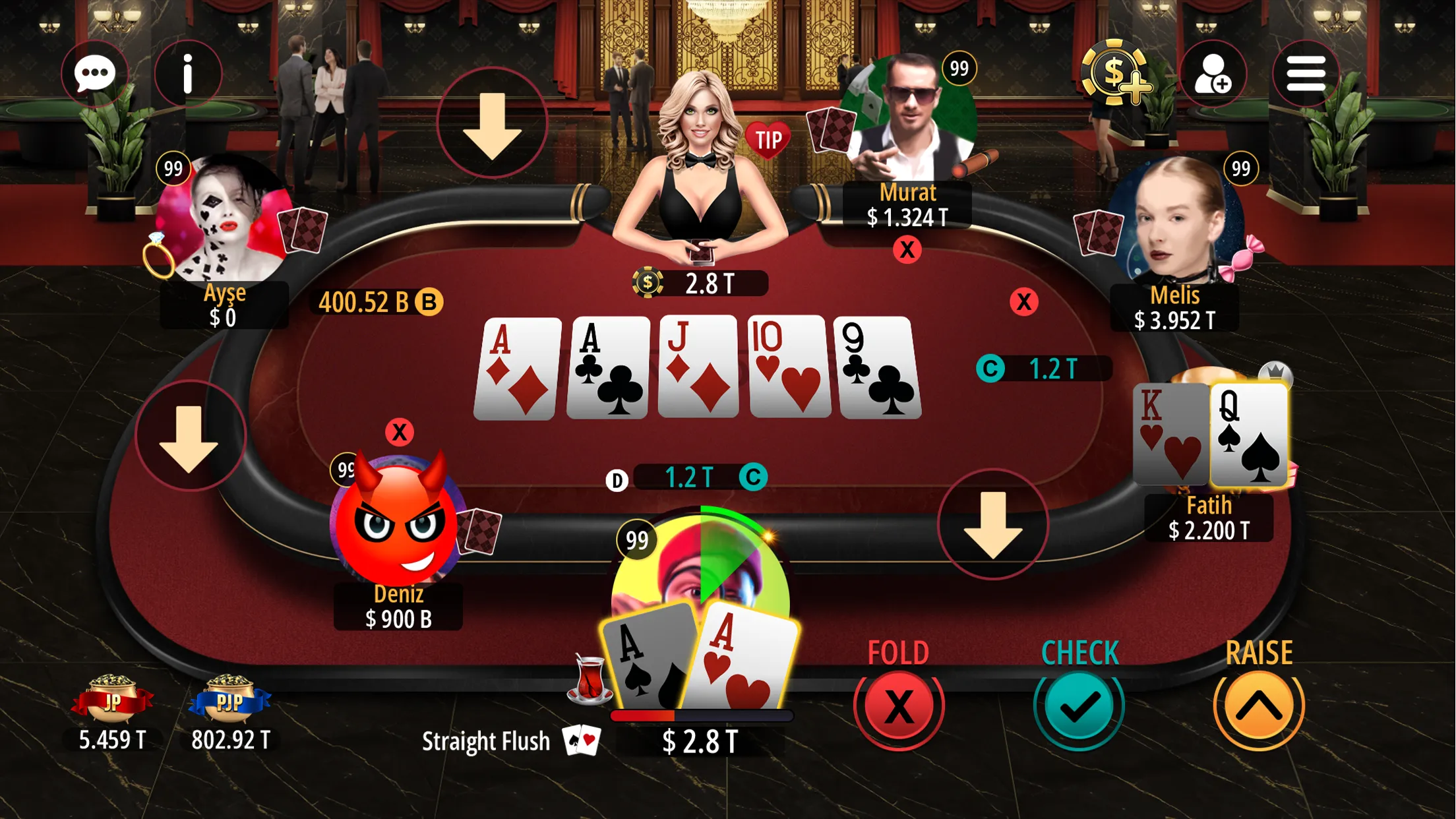
Poker is one of the most popular card games in the world, attracting millions of players with its unique combination of strategy, psychology, mathematics, and entertainment. Unlike many traditional card games, poker is not simply about receiving strong cards. Success often depends on how players evaluate situations, manage risks, read their opponents, and make decisions under pressure.
Over the years, poker has evolved from a traditional card game into an internationally recognized competitive activity, with professional tournaments, online platforms, and a large global community.
Read More: بازی آنلاین پوکر
Understanding the Basics of Poker
Poker is played in several different formats, but most variations share a common objective: winning chips or money by forming the best possible hand or convincing other players to fold.
One of the most widely recognized versions is Texas Hold’em. In this format, each player receives two private cards, while five community cards are gradually revealed on the table. Players combine their private cards with the community cards to create the strongest five-card hand possible.
A typical Texas Hold’em game includes four betting rounds:
- Pre-Flop: Players receive their two private cards and decide whether to call, raise, or fold.
- Flop: Three community cards are revealed.
- Turn: A fourth community card is added.
- River: The fifth and final community card is revealed.
After the final betting round, remaining players reveal their cards in a showdown. The player with the strongest hand wins the pot.
The Importance of Poker Hand Rankings
Understanding hand rankings is essential for anyone learning poker. Every player needs to know which combinations are stronger than others before making betting decisions.
The standard poker hand rankings, from strongest to weakest, are:
- Royal Flush
- Straight Flush
- Four of a Kind
- Full House
- Flush
- Straight
- Three of a Kind
- Two Pair
- One Pair
- High Card
Learning these combinations provides a foundation for understanding the game and making more informed decisions during each round.
Strategy: What Separates Experienced Players from Beginners?
Poker involves much more than luck. Although the cards dealt to each player are random, strategic decisions can significantly influence long-term results.
Experienced players consider several important factors before making a move.
Position at the Table
A player’s position determines when they act during a betting round. Players who act later generally have more information about their opponents’ decisions, which can provide a strategic advantage.
Understanding Probability and Odds
Calculating probabilities helps players evaluate whether continuing in a hand is mathematically reasonable. Understanding pot odds, drawing possibilities, and expected value can improve decision-making.
Reading Opponents
Poker also involves psychological awareness. Players often observe betting patterns, timing, and behavioral tendencies to understand how opponents might approach a particular hand.
Bankroll Management
Managing a poker bankroll responsibly is another important consideration. Setting clear limits, avoiding unnecessary risks, and never playing with money needed for essential expenses are fundamental principles of responsible participation.
Popular Types of Poker
Although Texas Hold’em receives much of the attention, several other poker variations have established dedicated audiences.
- Omaha: Players receive four private cards and must use exactly two of them alongside three community cards.
- Seven-Card Stud: Players receive a combination of face-up and face-down cards, without shared community cards.
- Five-Card Draw: Each player receives five private cards and has an opportunity to exchange some cards to improve their hand.
- Short Deck Poker: A variation played with a reduced deck, creating different probabilities and strategic considerations.
Each variation offers a different experience and requires players to adapt their strategies accordingly.
Online Poker and the Evolution of the Game
Technology has transformed how people experience poker. Online platforms have made different variations accessible through computers and mobile devices, allowing players to learn the rules, practice their skills, and explore different game formats.
Online poker has also contributed to the growth of international tournaments and digital communities. Players can study game theory, review previous hands, and learn from educational resources to develop a better understanding of strategic concepts.
However, choosing a trustworthy platform, understanding its rules, and reviewing local regulations are important considerations before participating in any online gaming activity.
Responsible Poker: Playing with Awareness
Poker should always be approached as a form of entertainment rather than a guaranteed way to earn money. Even highly experienced players cannot control the cards they receive, and short-term results can be unpredictable.
Responsible participation means setting time and financial limits, avoiding emotional decisions, and never chasing losses. Individuals should also follow applicable age restrictions and local laws.
Read More: آموزش بازی پوکر چینی
Final Thoughts
Poker remains one of the most fascinating card games because it combines probability, strategy, psychology, and decision-making in a constantly changing environment. Whether someone is interested in learning the basic rules or exploring advanced strategies, understanding the fundamentals is the first step toward appreciating the depth of the game.
With its diverse formats, international tournaments, and evolving online presence, poker continues to attract new audiences while maintaining its position as one of the world’s most recognizable card games.